Tesla continues to make strides with its Full Self-Driving (FSD) technology in Europe. Recent events in the Netherlands highlight important progress toward Tesla’s wider europe approval. Just days after receiving approval from the RDW, the Dutch vehicle authority, Tesla began rolling out another software update to vehicles. This rapid deployment shows that regulations are not delaying software updates for self driving in The Netherlands.
Recent Breakthroughs in Self Driving Netherlands
The RDW approval marks a key milestone in the FSD timeline in Europe. Owners in the Netherlands reported receiving the new FSD version shortly after regulatory clearance. This quick turnaround demonstrates an efficient process that allows Tesla to iterate rapidly based on real world data. The approval covers advanced supervised autonomy features tailored to Dutch roads, roundabouts, and cycling infrastructure.
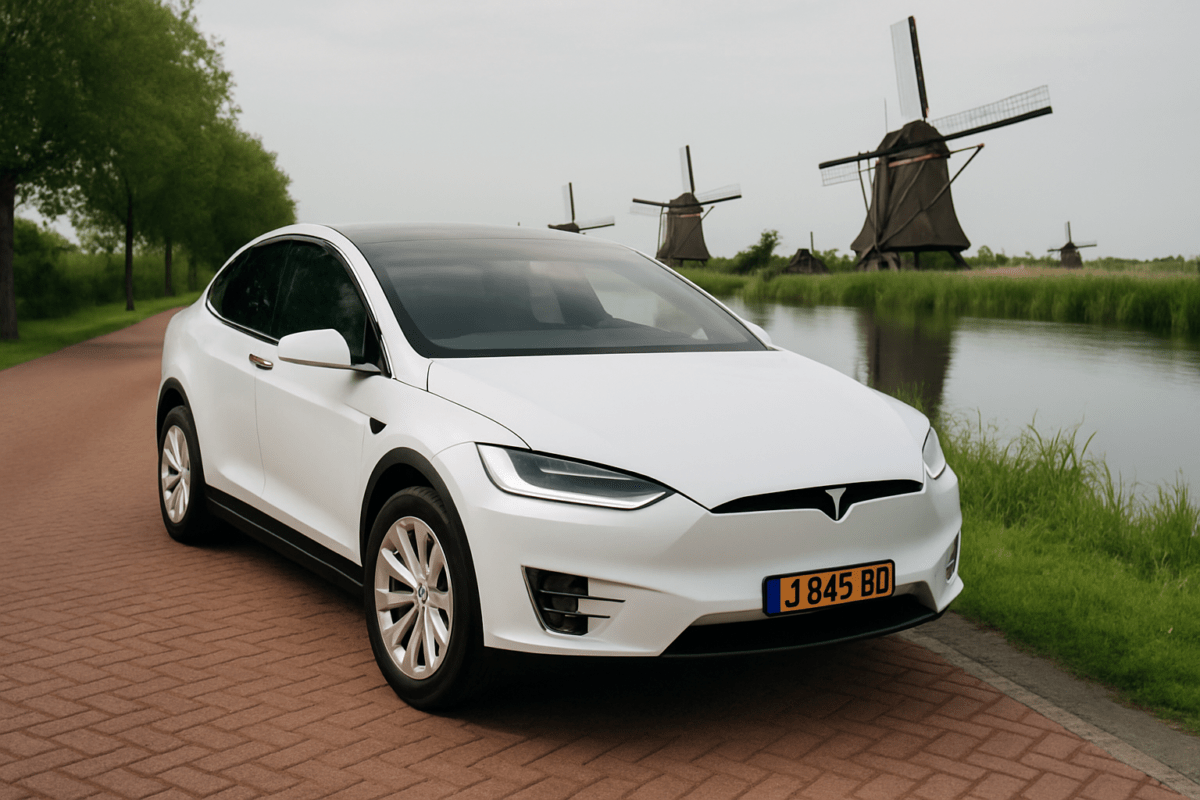
Importantly, the updates are not limited to a single vehicle type. Model X owners are also receiving the latest FSD software. This indicates the RDW approval applies across Tesla’s product line rather than being restricted to any one vehicle. Such flexibility accelerates data collection and improvement cycles, benefiting the entire fleet operating in the Netherlands.
Understanding the Regulatory Process for FSD Europe Approval
European regulators take a measured approach to autonomous vehicle technology. The Netherlands has positioned itself as a leader in testing and approving advanced driver assistance systems. By granting approval and enabling swift software deployment, the RDW sets a practical example for balancing safety with innovation. This approach helps establish realistic fsd europe dates while gathering valuable operational data.
Industry observers note that frequent over the air updates are fundamental to FSD development. The fact that another Tesla FSD update rolled out just days after RDW approval seems to imply that regulatory review occurs at the system level. Subsequent improvements can therefore deploy without repeated full approvals, provided they stay within approved parameters. This efficiency is crucial for the overall FSD timeline in Europe.
The FSD Timeline in Europe
To better understand progress toward fsd europe approval, the following table outlines key milestones in the fsd timeline europe with a focus on self driving netherlands.
| Period | Milestone | Details |
|---|---|---|
| 2023-2024 | Initial Testing | Supervised FSD beta in select EU countries. Established data collection baseline. |
| Late 2025 | RDW Engagement | Formal evaluation of Tesla FSD software begins. Set foundation for first national approvals. |
| April 2026 | First Major RDW Approval | Supervised FSD cleared for public roads. Major step in fsd timeline europe. |
| April 2026 | New FSD update | Tesla sent out a new update for FSD Supervised. Enabled rapid rollout of another Tesla FSD update days later. |
| May 5, 2026 | EU TCMV Meeting | RDW invited to present findings. Knowledge sharing occurs but no EU-wide decision expected soon. |
| 2026 / 2027+ | Projected Expansion | Potential wider EU adoption based on NL data. Will influence Europe’s FSD availability date. |
EU TCMV Meeting and Outlook for FSD Europe Dates
The Technical Committee on Motor Vehicles (TCMV) will meet on May 5, 2026. RDW representatives have been invited to share insights from their approval process and early deployment data from self driving netherlands. This presentation will help inform EU member states about practical implementation of supervised FSD technology.
However, stakeholders should not expect any immediate decision on EU wide fsd europe approval. Harmonizing rules across multiple countries requires extensive consultation, safety validation, and alignment with existing UNECE vehicle regulations. While the Dutch experience provides valuable real world evidence, the path to a unified europe fsd date remains gradual. National initiatives like those in the Netherlands will likely continue to lead while EU level frameworks evolve.
Implications for Autonomous Vehicle Adoption
The rapid post approval software rollout in the Netherlands carries several important implications. First, it reassures manufacturers that approved systems can receive iterative improvements without constant regulatory intervention. This agility supports continuous safety and performance gains. Second, the inclusion of Model X proves the approval process can be applied across vehicle platforms. This reduces complexity and speeds up fleet wide deployment.
For consumers in the Netherlands, these developments mean earlier access to enhanced driver assistance features. Improved navigation, obstacle detection, and route planning tailored to local conditions can increase both convenience and safety. Long term, successful operation in the Netherlands could encourage neighboring countries to adopt similar frameworks, gradually advancing the fsd timeline europe.
Challenges remain though, including public acceptance and infrastructure adaptations. European roads present unique conditions compared to other markets, from dense urban cycling networks to strict traffic rules. Tesla must continue refining its vision based FSD system to address these factors. Data collected from Dutch vehicles will prove instrumental in this process.
Technical Considerations and Safety Focus
Tesla’s FSD relies on advanced computer vision, neural networks, and over the air updates. Unlike some competitors that use lidar, Tesla emphasizes camera based perception supplemented by radar in certain models. The RDW approval process evaluates these systems against European safety standards. Rapid updates allow Tesla to address issues identified during initial deployments quickly.
Safety remains the top priority. Tesla publishes safety reports showing that vehicles with FSD engaged have lower incident rates than those without when properly supervised. The Netherlands deployment will generate additional data specific to European driving patterns. This information can refine the system for wider use and support future regulatory submissions across the continent.
FAQ
What is the current status of self driving Netherlands with Tesla FSD?
Will there be an EU wide FSD Europe approval soon?
Does the RDW approval apply only to certain Tesla models?
How do regulations affect FSD Europe dates and timeline?
When might we see a broader Europe FSD date for unsupervised driving?
This article is for informational purposes. Always refer to official Tesla communications and local regulators for the latest details.