Tesla Cybercab Receives EPA Certificate of Conformity: Key Milestone for US Commercial Deployment
Tesla has achieved another important regulatory milestone with its Cybercab receiving an EPA Certificate of Conformity. This development clears a key federal hurdle for the vehicle to enter the US market legally.
What is the EPA?
The Environmental Protection Agency (EPA) is an independent executive agency of the United States federal government, created in 1970 by President Richard Nixon. Its primary mission is to protect human health and the environment by enforcing regulations based on laws passed by Congress. In the context of vehicles, the EPA sets and enforces standards for emissions, air quality, and fuel economy to reduce pollution from transportation.
What is an EPA Certificate of Conformity?
An EPA Certificate of Conformity (often abbreviated as CoC) is a formal certification issued by the EPA after reviewing a manufacturer's test data and documentation. It confirms that a specific vehicle model or engine family meets all applicable federal emissions standards under the Clean Air Act. Without this certificate, a new vehicle cannot be legally sold, imported, or introduced into commerce in the United States.
This is separate from safety certifications handled by the National Highway Traffic Safety Administration (NHTSA) but is equally essential for bringing a vehicle to market.
What Does This Certificate Allow and Where?
The certificate allows Tesla to legally introduce the Cybercab into US commerce. This means the vehicle can be sold, leased, registered with state DMVs, and operated on public roads for commercial purposes, such as Tesla's planned robotaxi service.
It applies nationwide across all 50 states and US territories. While states may have additional requirements (e.g., for autonomous vehicle testing permits), the federal EPA approval is a foundational step that removes a major barrier to deployment. It is particularly significant for purpose-built autonomous vehicles like the Cybercab, which lack traditional controls and are designed for high-volume, unsupervised operation.
In short, this paves the way for commercial robotaxi services in the United States once other regulatory and operational pieces (like state approvals and unsupervised FSD capability) are in place.
A Bit About the Cybercab
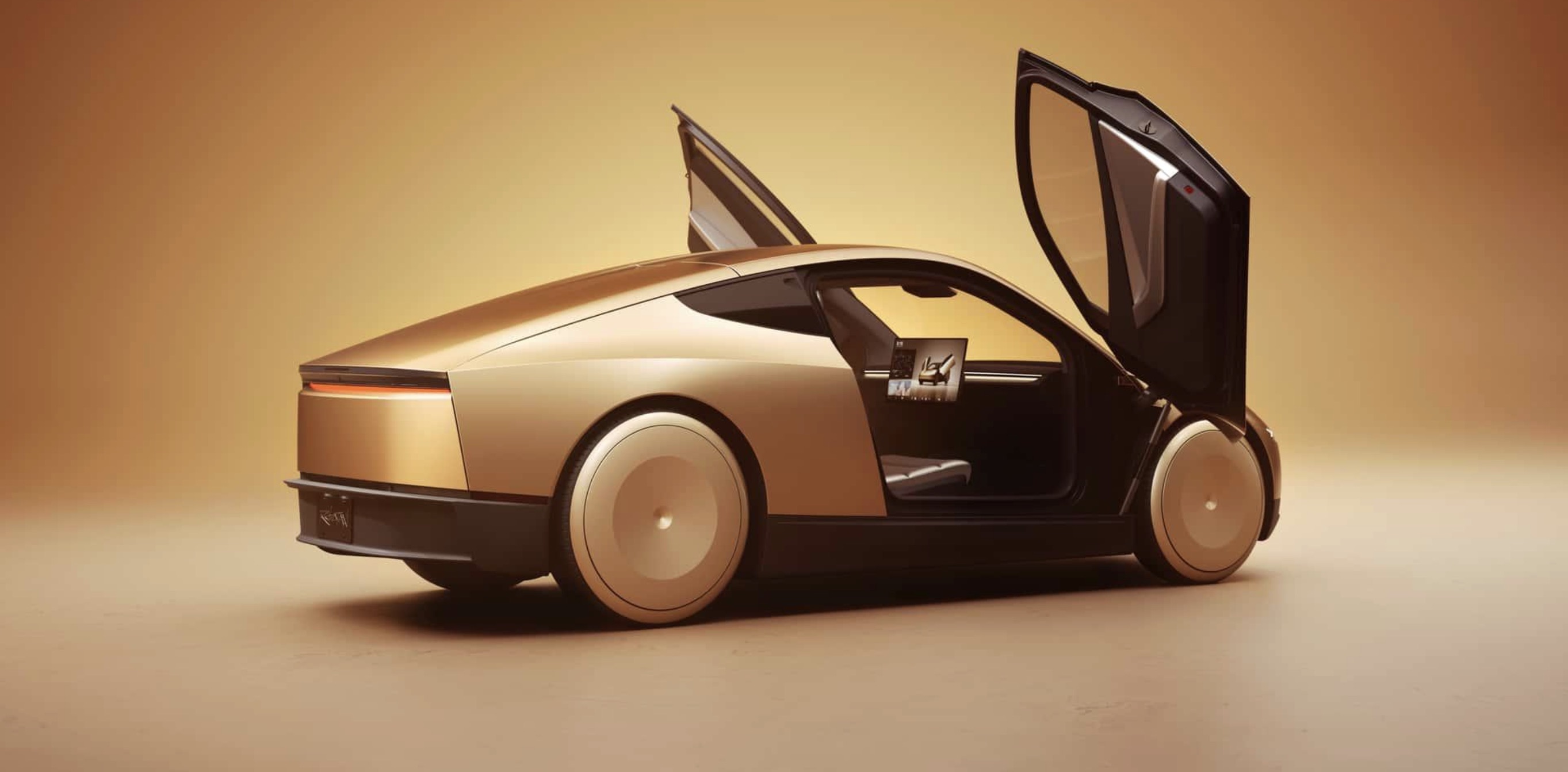
The Tesla Cybercab is a two-seater, all-electric autonomous robotaxi unveiled by Elon Musk in October 2024. It features a futuristic design with no steering wheel, pedals, or traditional dashboard, relying entirely on cameras, AI, and Tesla's Full Self-Driving software for navigation. The vehicle is optimized for cost efficiency, with a target production cost under $30,000 and operating costs as low as 20 cents per mile.
It is designed for ride-hailing services where passengers summon it via the Tesla app, with no human driver required. Production is already underway at scale, with recent reports and images showing hundreds or thousands of units in various stages of assembly at Tesla facilities.
Tesla's Milestone Tweet
The news was highlighted on social media by industry observers. Here is the key post from Herbert Ong (@herbertong) detailing the certificate and its implications:
🚨 Tesla Cybercab has received an EPA Certificate of Conformity, an important regulatory milestone for the vehicle
— Herbert Ong (@herbertong) June 15, 2026
The certificate confirms that the Cybercab meets all applicable federal emissions requirements and can be legally introduced into US commerce. $TSLA pic.twitter.com/frkMAb1mwn
View the original post and image here. The attached image shows the official certificate documentation.
Cybercab's EPA Range: 418 Miles Explained
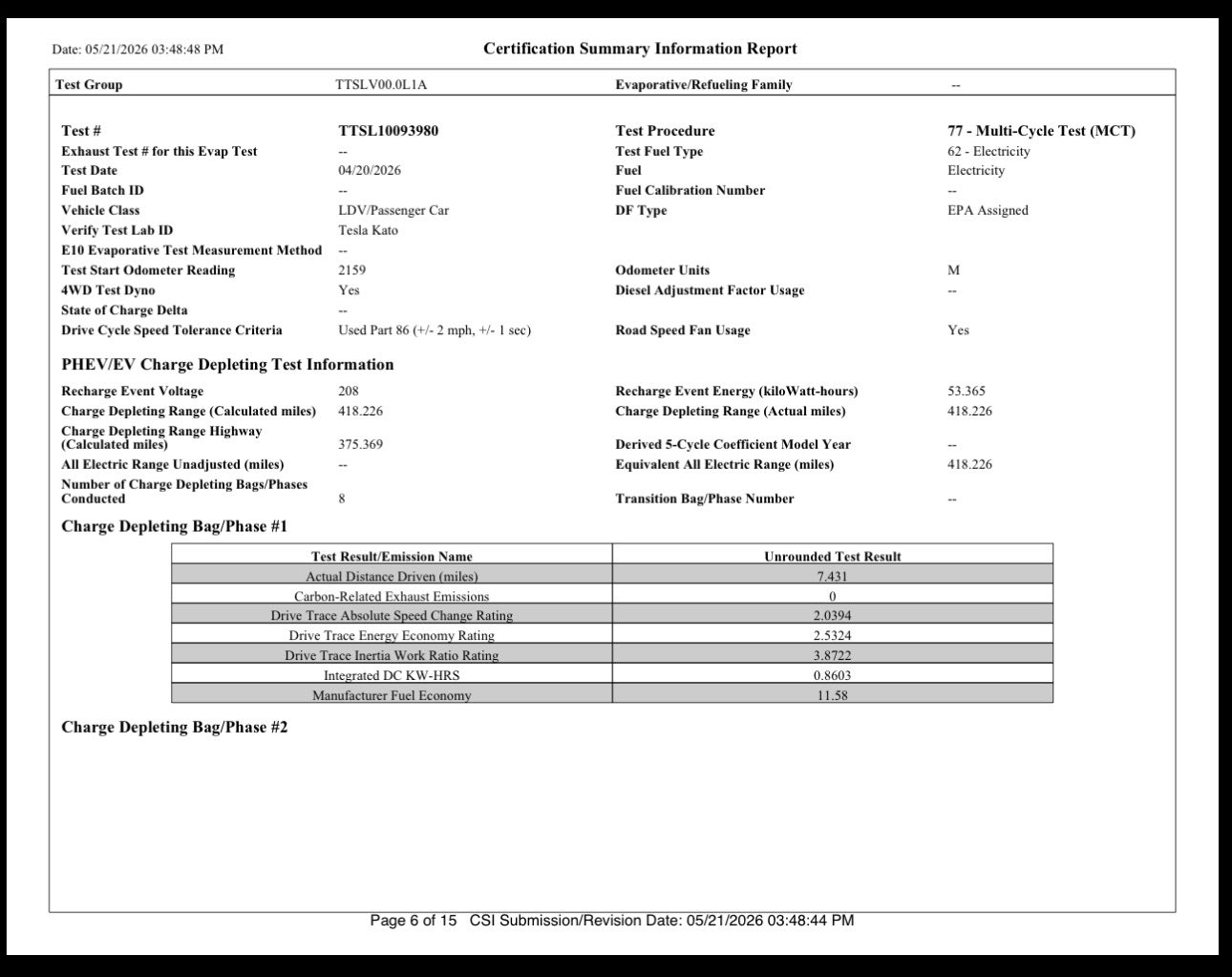
One of the key details revealed in the EPA Certificate of Conformity is the Cybercab's “Charge Depleting Range” of over 418 miles. This metric comes from the EPA's standardized testing procedures for electric vehicles.
In EPA testing, the "Charge Depleting Range" measures the total distance the vehicle can travel while primarily using battery power (depleting the charge) under a specific mixed driving cycle that includes city and highway conditions. It represents the usable range before the vehicle switches to a more conservative operating mode or requires recharging. For the Cybercab, this figure exceeds 418 miles overall.
Highway-only Charge Depleting Range is listed at just over 375 miles. These impressive numbers underscore the Cybercab's efficiency, which is essential for a robotaxi intended for continuous operation with minimal charging downtime. The vehicle's lightweight design, aerodynamic shape, and optimized powertrain contribute to this range despite its purpose-built autonomous configuration.
Here's the range chart from the EPA certificate:
Scale of Cybercab Production
Production of the Cybercab is already at an impressive scale. Recent posts from the Tesla community highlight the volume of vehicles being built. For example, detailed images and reports from the factory show a large number of Cybercabs in production and storage:
View the post showing production scale here.
This level of pre-production indicates Tesla is preparing for rapid deployment once full regulatory and unsupervised autonomy approvals are secured.