Tesla App Decompile Reveals New FSD Streak Tracking and Cabin Camera Checks
The latest decompile of the Tesla iOS app version 4.58.5 has surfaced several significant FSD related code elements. The findings come directly from the detailed analysis posted by @Tesla_App_iOS on X. This post provides a focused look at internal changes that impact how FSD is tracked and managed within the vehicle software stack.
Deeper FSD Tracking and Streak Days Gamification
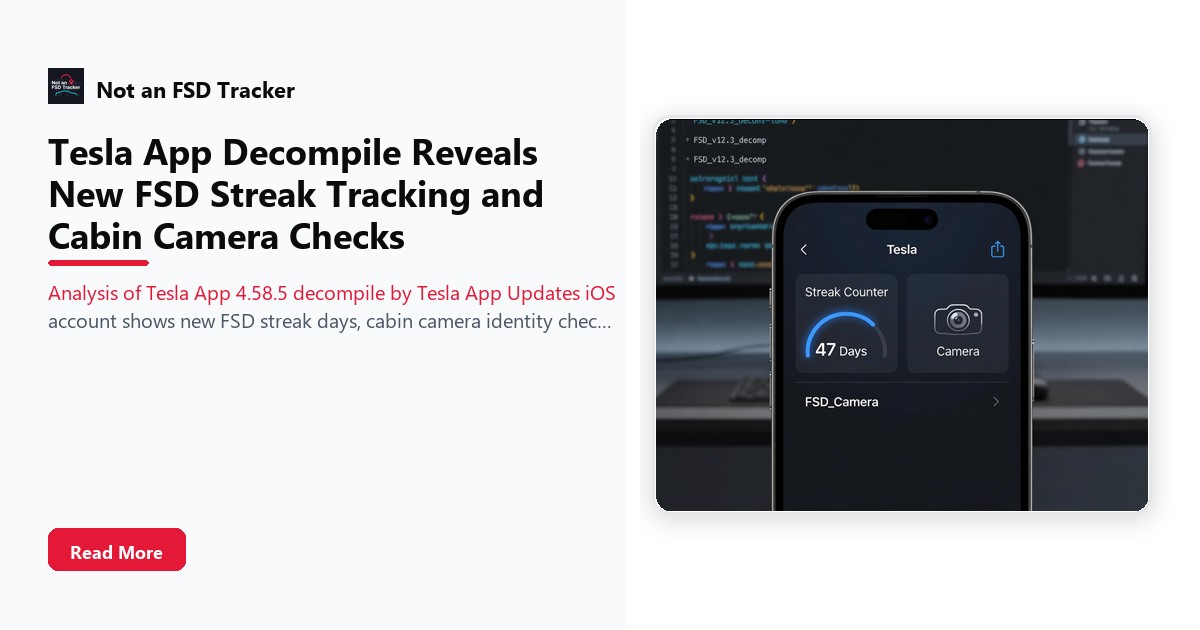
One of the most notable additions is expanded FSD tracking capabilities combined with a new streak days feature. This gamification element appears designed to encourage consistent use of FSD by logging consecutive days of engagement. The code references suggest the app now monitors usage patterns at a more granular level than previous versions, potentially feeding data back to Tesla for model improvement and user behavior analysis.
Such tracking mechanisms are common in advanced driver assistance systems as they help refine algorithms and identify areas where driver intervention occurs most frequently. The streak days system adds a layer of user engagement that could influence how owners interact with the FSD supervised feature on a daily basis.
FSD Identity Checks via Cabin Camera
The decompile also uncovered new FSD identity checks that leverage the cabin camera. These checks likely serve to confirm driver presence and attentiveness during FSD sessions. References in the code point to verification flows that may become critical as Tesla moves toward more advanced autonomy levels.
By using the cabin camera for identity confirmation, the system can ensure that the correct authorized user is operating the vehicle under FSD. This adds an important accountability layer and could support future regulatory requirements around driver monitoring and logging. The implementation seems prepared for both current supervised operation and potential expansions into unsupervised scenarios.
Major Autopilot and FSD Architecture Overhaul
Perhaps the most substantial discovery is the internal description of a Base + Override architecture for the Autopilot and FSD systems. This represents a significant refactoring of how core driving behaviors and exception handling are structured in the software.
The Base component likely handles standard FSD operations while the Override layer manages interventions, edge cases, and driver takeovers. This modular approach could improve code maintainability, allow faster iteration on specific behaviors, and enhance overall system reliability. Such architectural shifts often precede major software releases as they provide a cleaner foundation for adding new capabilities.
Key FSD Elements Discovered in App 4.58.5 Decompile
| FSD Element | Description | Potential Impact |
|---|---|---|
| Streak Days Tracking | Gamification for consecutive FSD usage days | Increased user engagement and data collection |
| Cabin Camera Identity Checks | Verification of driver identity during FSD sessions | Enhanced accountability and regulatory readiness |
| Base + Override Architecture | Refactored Autopilot/FSD code structure | Improved modularity for future feature development |
All findings originate from the public decompile shared by the @Tesla_App_iOS account. The original post and accompanying article provide the full technical context and string references extracted from the app binary. Readers can view the source post directly at the link provided above for additional details on the reverse engineering process.
Implications for FSD Rollout Progress
These code level discoveries offer a window into Tesla ongoing development priorities. The emphasis on deeper tracking and identity verification signals preparation for scaled deployment where usage data and driver accountability become increasingly important. The architecture overhaul suggests Tesla is investing in long term software foundations rather than incremental patches.
While these elements remain client side preparations that are often controlled by server side feature flags, their presence in the latest app version indicates active work on FSD user experience and system robustness. Owners and observers can expect continued refinements in how FSD sessions are logged, verified, and potentially gamified in future updates.
Outlook and Next Steps
As Tesla continues to iterate on FSD supervised and prepares infrastructure for higher autonomy levels, decompiles like this one serve as valuable indicators of direction. The combination of gamification, camera based checks, and architectural modernization points to a maturing product that balances user engagement with technical and regulatory considerations.
Further analysis of subsequent app versions will likely reveal how these features evolve and whether additional FSD related components surface in the coming weeks. The community remains indebted to independent researchers who share such insights publicly.