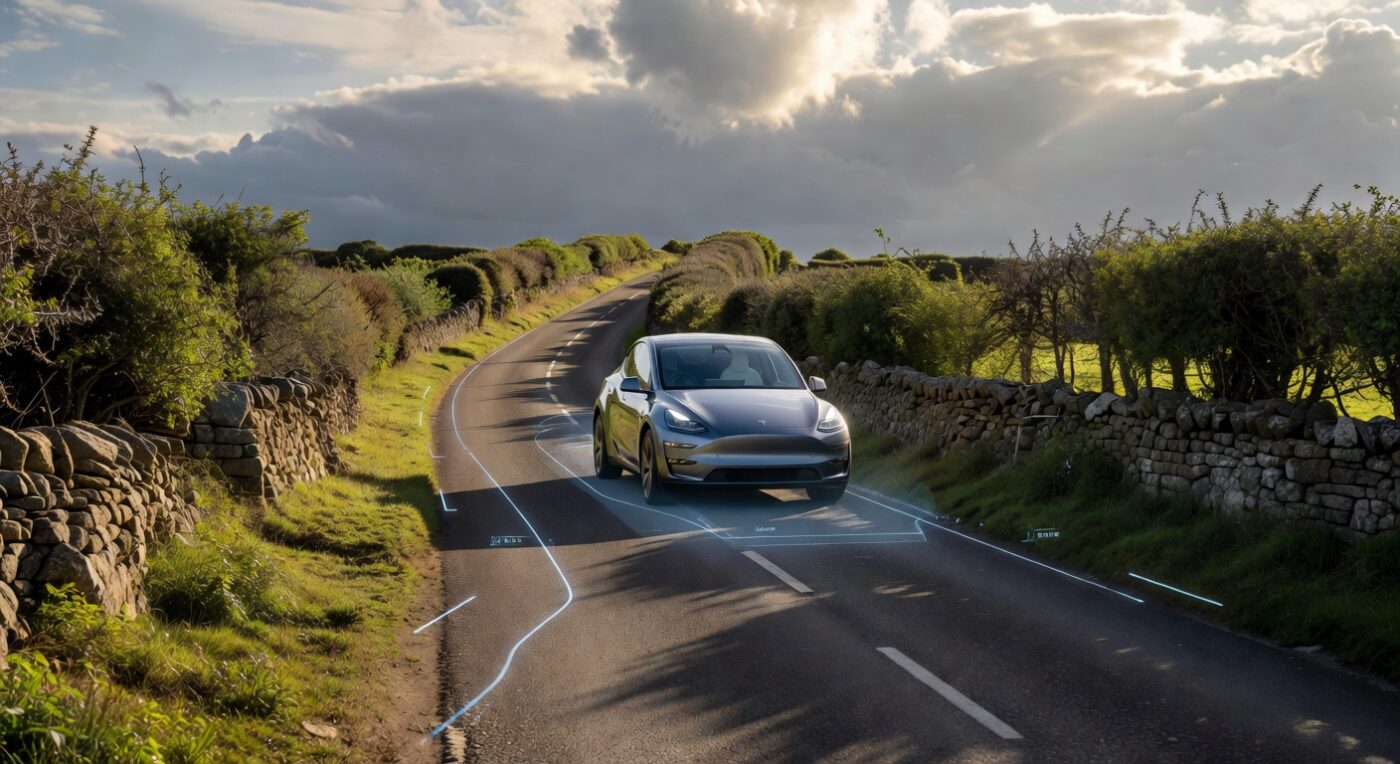
As of late May 2026, Tesla’s Full Self-Driving (Supervised) remains unavailable for activation on UK roads, while it has already begun rolling out in the Netherlands and Lithuania. This article examines the current global status, the specific regulatory steps required in the UK, what is holding up approval, and how the British process compares to the faster path taken by the Dutch RDW.
Current Status of Tesla FSD Supervised Globally
Tesla currently offers Full Self-Driving (Supervised) in the United States, Canada, Mexico, China, Australia, New Zealand, South Korea, the Netherlands, and Lithuania. These markets allow activation of the full supervised package, which includes advanced navigation, automatic lane changes, and city-street driving – all while still requiring the driver to remain attentive and ready to intervene at all times.
In the UK, vehicles support only the basic Autopilot and Enhanced Autopilot features. Full FSD Supervised has not yet been enabled due to pending regulatory approval. Tesla has conducted demonstration drives in London and continues to collect data from the UK fleet, but the software remains locked behind regulatory approval.
UK Legal Framework for Autonomous Vehicles
The Automated Vehicles Act 2024 (which received Royal Assent in May 2024) establishes the primary legal framework for fully autonomous vehicles in Great Britain. It sets high safety standards (requiring vehicles to be at least as safe as a careful and competent human driver) and shifts liability to the manufacturer when a vehicle is operating in true self-driving mode without driver input.
However, Tesla’s current FSD Supervised is classified as a Level 2 Advanced Driver Assistance System (ADAS). The driver remains fully responsible at all times. Therefore, it is regulated under the existing GB type approval process administered by the Vehicle Certification Agency (VCA), using UN Regulation 171 (R171) for Driver Control Assistance Systems – the same regulatory route used by the Dutch RDW.
The Automated Vehicles Act does not block or prevent approval of FSD Supervised. It simply governs higher levels of automation that may come later.
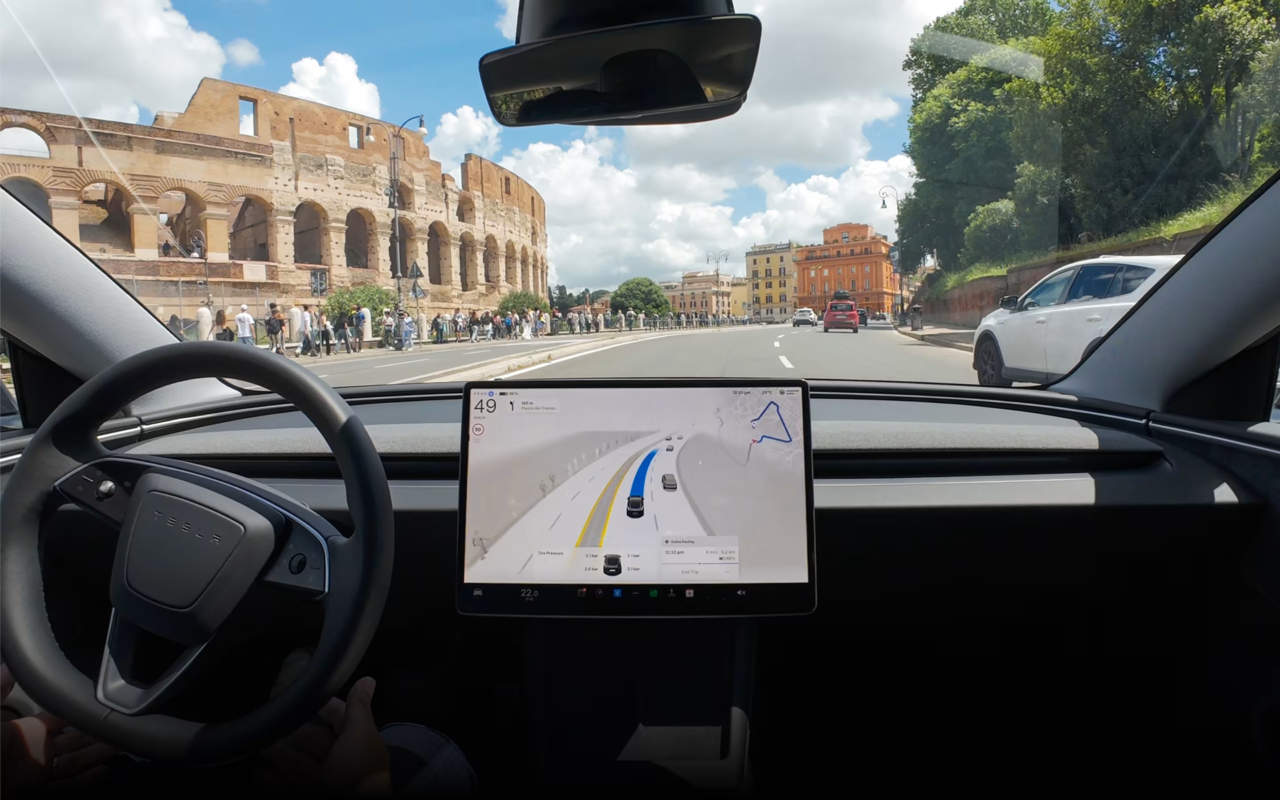
Steps Required for FSD UK Approval
For Tesla to activate FSD Supervised in the UK, the following steps are required:
- Formal Application to the VCA Tesla must submit an application for type approval or specific authorisation of the FSD Supervised software for Great Britain-registered vehicles.
- Comprehensive Safety Case Detailed technical documentation covering software architecture, safety mechanisms, driver monitoring systems, and performance data must be provided.
- UK-Specific Validation Evidence that the system performs safely under British conditions — including roundabouts, variable road markings, left-side driving, UK signage, and typical weather — is essential.
- Localised Testing and Data Review The VCA may require or review UK-specific testing data (Tesla is already collecting this through shadow mode uploads from UK vehicles).
- Software Validation and Compliance Final validation that the software complies with the Highway Code and relevant UK regulations.
- Marketing and User Education Review (possible) Regulators may review how Tesla markets the system and educates drivers about the continued need for supervision.
Once approved, Tesla would push an over-the-air update to enable the features on eligible UK vehicles.
Comparison of FSD Approval Status
| Region | Approval Status | Key Regulator | Timeline Notes |
|---|---|---|---|
| UK | Only basic Autopilot is active. FSD Supervised pending | DfT / VCA | Projected late 2026 or 2027 |
| Netherlands | Approved 10 April 2026; rollout underway | RDW | Rollout began Q2 2026 |
| EU (Other) | Harmonized type approval pending | UNECE + national authorities | Ongoing discussions; possible broader rollout summer/autumn 2026 |
| United States | Widely deployed with ongoing updates | NHTSA + state rules | Available since 2023 with continuous refinements |
This table highlights the key difference: the EU benefits from mutual recognition and harmonised processes, while the UK requires standalone validation.
What Is Holding Up FSD UK Dates
Several factors are contributing to the delay:
Regulatory Caution – UK authorities maintain high safety standards and will likely require clear evidence that the system improves, or at least maintains, road safety.
Post-Brexit Regulatory Independence – The UK does not automatically recognise Dutch or EU approvals. A separate GB assessment by the VCA is required.
Need for UK-Specific Data – The system must demonstrate reliable performance on British roads. Tesla is likely actively collecting this data, but regulators need sufficient validated evidence.
No Confirmed Formal Application Yet – As of late May 2026, there has been no official public announcement that Tesla has submitted a complete application to the VCA.
Comparison with Europe and RDW Approvals
The Netherlands has moved the fastest in Europe thanks to the RDW (the Dutch vehicle authority). On 10 April 2026, the RDW granted Tesla a European type approval with provisional validity in the Netherlands after more than 18 months of testing. This allowed immediate rollout on Dutch roads.
The RDW used an exemption route (Article 39 of EU Regulation 2018/858) because FSD Supervised is a new, “novel” technology. Other EU countries can now recognise this approval nationally or wait for a formal EU-wide vote through the Technical Committee on Motor Vehicles (TCMV), expected possibly in July or October 2026.
Key differences between UK and RDW/EU approach:
- The RDW leveraged its existing relationship with Tesla and used a fast-track exemption path.
- The UK must conduct its own independent safety assessment via the VCA.
- The EU allows mutual recognition between member states; the UK does not automatically recognise EU approvals post-Brexit.
- Germany has already approved Level 3 systems for other manufacturers under strict conditions, showing that European regulators are willing to approve advanced driver assistance when safety data is strong.
The UK’s Automated Vehicles Act actually gives Britain one of the most modern liability frameworks in the world for future unsupervised autonomy – but for today’s supervised FSD, the VCA route remains the critical path here.
Projected FSD Timeline UK
Realistic projection: The initial supervised rollout in the UK is most likely in late 2026 or early 2027, assuming Tesla submits (or has already submitted) a formal application in the coming weeks or months and that the VCA review proceeds smoothly.
This timeline assumes:
- Continued collection and positive validation of UK-specific data
- No major safety concerns arising during the VCA assessment
- Possible alignment with broader EU progress
Tesla has not given any firm public commitment on UK timing, but the company is clearly preparing the commercial side (the shift to subscription-only FSD in the UK from 21 May 2026 is widely seen as preparation for wider availability).
Final Thoughts
The Netherlands has proven that rigorous, evidence-based approval of FSD Supervised is achievable in 2026. The UK has the regulatory tools, the data collection infrastructure, and the legal framework to follow – it simply requires an independent assessment tailored to British roads.
UK Tesla owners should continue to allow the upload of high-quality fleet data and monitor official announcements from the VCA and the Department for Transport. Approval could come faster than many expect once a formal application is under review.
FAQ
What legal framework governs autonomous vehicles in the UK and how does it affect Tesla’s FSD Supervised?
The UK’s Automated Vehicles Act 2024 sets high safety standards for fully autonomous vehicles and shifts liability to manufacturers in true self-driving mode, but Tesla’s FSD Supervised, as a Level 2 system, is regulated under existing type approval processes and requires separate approval before activation.
What is the current status of Tesla’s Full Self-Driving (Supervised) in the UK and other regions?
As of late May 2026, Tesla’s Full Self-Driving (Supervised) is not yet available in the UK but is operational in the United States, Canada, Mexico, China, Australia, New Zealand, South Korea, the Netherlands, and Lithuania, with rollout underway in some of these countries.
What steps are needed for Tesla’s FSD Supervised to gain approval in the UK?
Tesla must submit a formal application to the Vehicle Certification Agency (VCA), provide comprehensive safety documentation, demonstrate UK-specific system performance, undergo local testing, confirm compliance with UK regulations, and potentially address marketing and driver education considerations.
Why is there a delay in the approval of FSD Supervised in the UK compared to the Netherlands and other EU countries?
The delay is due to UK regulatory caution, the need for independent safety assessments post-Brexit, the requirement for UK-specific data, and the fact that Tesla has possibly not yet submitted a complete application, whereas the Netherlands leveraged an expedited exemption route for approval.
When might Tesla’s FSD Supervised become available in the UK?
The most realistic projection is late 2026 or early 2027, contingent upon Tesla’s application, the VCA’s review process, the collection of UK-specific data, and the absence of major safety concerns.